
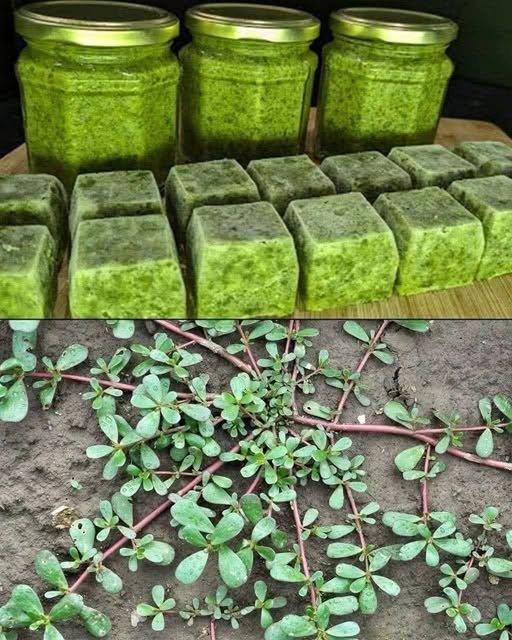
Purslane Green Power Cubes
Description
These frozen green cubes are made from fresh purslane blended with herbs, garlic, and olive oil. They’re excellent for soups, stews, smoothies, sauces, rice, eggs, or sautéed vegetables. Think of them as flavor-and-nutrition boosters you can keep in the freezer.
Ingredients
- 4 cups fresh purslane leaves and tender stems
- 1 cup parsley or cilantro
- 3 garlic cloves
- ½ cup olive oil
- 2 tablespoons lemon juice
- 1 teaspoon sea salt
- ½ teaspoon black pepper
- Optional:
- 1 green chili
- ¼ cup spinach
- 2 tablespoons basil
Instructions
- Wash purslane thoroughly to remove dirt and grit.
- Remove thick or woody stems.
- Bring water to a boil and blanch purslane for 30 seconds.
- Transfer immediately to ice water to preserve color.
- Drain very well.
- Add purslane, herbs, garlic, lemon juice, salt, and olive oil to a blender.
- Blend until smooth.
- Pour into ice cube trays or small containers.
- Freeze until solid.
- Transfer cubes to freezer bags for long-term storage.
Serving Suggestions
Use 1–2 cubes in:
- Soups
- Pasta sauces
- Omelets
- Rice dishes
- Smoothies
- Stir-fries
- Marinades
- Dips
Yield
- About 20–24 cubes
- Serves: 10–12
Storage Tips
- Freeze up to 6 months.
- Store in airtight freezer bags.
- Label with date.
Important Notes
- Only harvest purslane from pesticide-free areas.
- Avoid plants growing beside busy roads.
- Purslane contains oxalates, so people prone to kidney stones should consume moderately.
- The succulent stems are edible too.
Nutritional Information
(Approximate per 2 cubes)
- Calories: 45
- Fat: 4g
- Carbohydrates: 2g
- Fiber: 1g
- Protein: 1g
- Vitamin A: 25% DV
- Vitamin C: 20% DV
- Magnesium: 8% DV
- Omega-3 fatty acids: moderate amount
Health Benefits of Purslane
1. Rich in Omega-3s
One of the few leafy plants naturally high in omega-3 fatty acids.
2. Antioxidant Support
Contains betalains, glutathione, vitamin C, and vitamin E.
3. Good for Hydration
Succulent leaves contain high water content.
4. Supports Heart Health
Potassium and omega-3s may support cardiovascular wellness.
5. Digestive Support
Contains fiber that may help digestion.
Tips for Best Results
- Blend with spinach for milder flavor.
- Add walnuts or sunflower seeds for richness.
- Freeze in small portions for easy cooking.
- Add parmesan for a pesto-style version.
Q & A
Q: Can purslane be eaten raw?
Yes. It’s commonly added to salads and sandwiches.
Q: What does purslane taste like?
It has a slightly lemony, peppery, mildly salty flavor with a crunchy texture.
Q: Can I dry purslane?
Yes, but freezing preserves nutrients and flavor better.
Q: Is purslane safe for everyone?
Generally yes, but people with kidney stone issues should moderate intake because of oxalates.
Q: Can I cook it like spinach?
Absolutely. It can be sautéed, steamed, or added to soups.
Q: How do I identify purslane?
Look for:
- Reddish stems
- Thick succulent leaves
- Low-growing spreading habit
- Small yellow flowers