
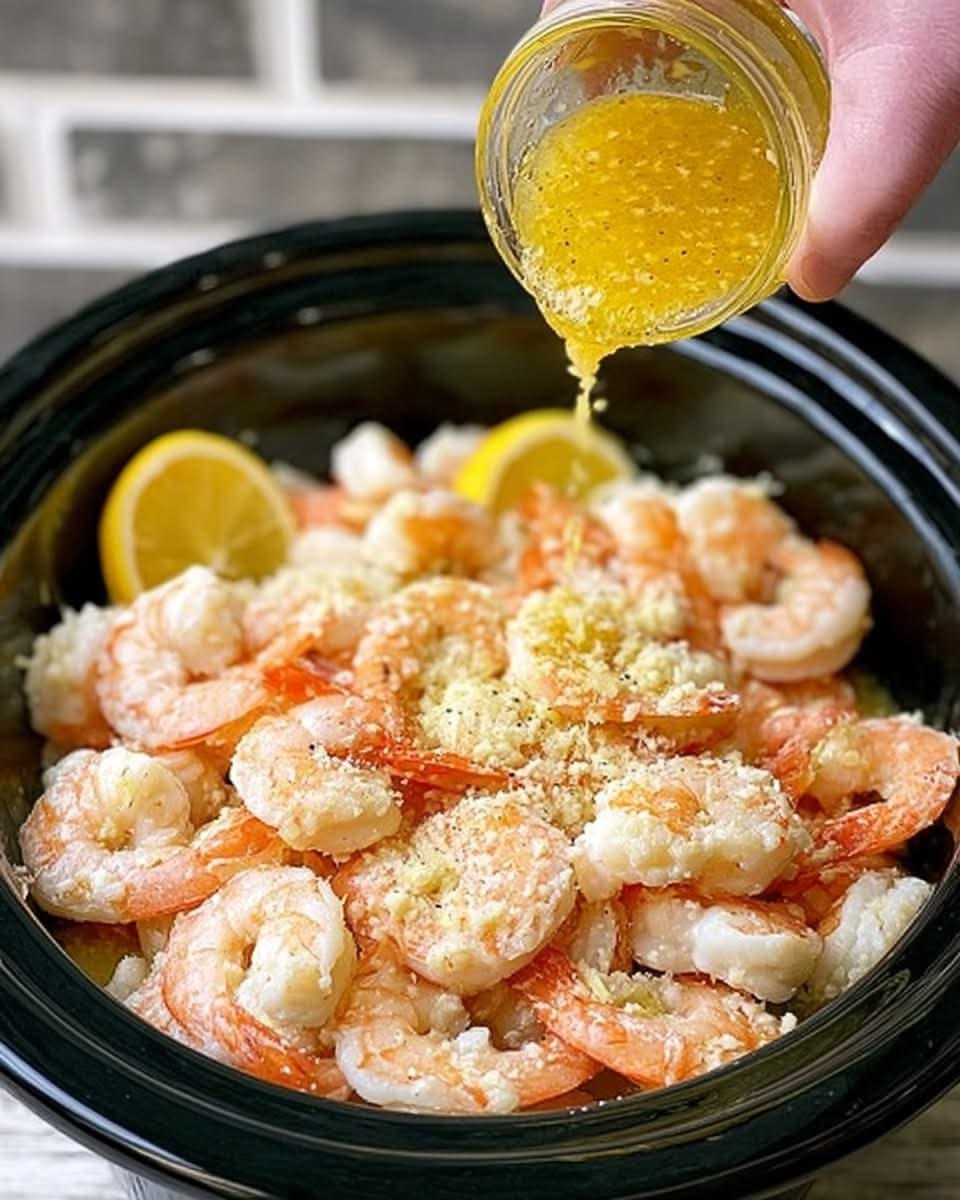
Slow Cooker Garlic Butter Lemon Shrimp
Description
This Slow Cooker Garlic Butter Lemon Shrimp is an easy, flavor-packed seafood recipe featuring juicy shrimp cooked in a rich combination of melted butter, fresh garlic, lemon juice, herbs, and Parmesan. The buttery sauce coats every shrimp with bright citrus and savory garlic flavor, while a touch of paprika and black pepper adds warmth without overpowering the seafood. Because shrimp cook quickly, they’re added to the slow cooker for only a short time, keeping them tender and succulent instead of rubbery. Serve this dish over rice, pasta, creamy grits, or with crusty bread for soaking up every drop of the incredible garlic butter sauce.
Ingredients For the Shrimp
- 2 lbs large or jumbo raw shrimp, peeled and deveined
- ½ tsp salt
- ½ tsp freshly ground black pepper
- ½ tsp smoked paprika
- ¼ tsp red pepper flakes, optional
For the Garlic Butter Lemon Sauce
- ½ cup unsalted butter, melted
- 6 garlic cloves, finely minced
- ¼ cup fresh lemon juice
- 1 tsp fresh lemon zest
- 2 tbsp extra-virgin olive oil
- ½ cup low-sodium chicken or seafood broth
- 1 tsp Italian seasoning
- ½ tsp dried oregano
- ½ tsp garlic powder
- ¼ tsp freshly ground black pepper
For Finishing
- ⅓ cup freshly grated Parmesan cheese
- 2 tbsp fresh parsley, finely chopped
- 1 tbsp fresh lemon juice
- Fresh lemon slices or wedges
- Extra black pepper, to taste
Step-by-Step Instructions
- If using frozen shrimp, thaw them completely in the refrigerator or under cold running water.
- Peel and devein the shrimp if necessary. You can leave the tails attached for a more attractive presentation.
- Pat the shrimp thoroughly dry with paper towels.
- Season them with salt, black pepper, smoked paprika, and optional red pepper flakes.
- Set the seasoned shrimp aside while preparing the garlic butter sauce.
- Add melted butter to the bottom of a 5–6 quart slow cooker.
- Add the minced garlic, olive oil, lemon juice, lemon zest, chicken or seafood broth, Italian seasoning, oregano, garlic powder, and black pepper.
- Stir until the ingredients are thoroughly combined.
- Cover the slow cooker and heat the sauce on HIGH for approximately 20–30 minutes, until hot and fragrant.
- Stir the sauce once during heating so the garlic and seasonings are evenly distributed.
- Add the seasoned raw shrimp to the hot garlic butter sauce.
- Gently toss until every shrimp is coated.
- Arrange the shrimp as evenly as possible rather than leaving them in a large pile.
- Cover the slow cooker again.
- Cook on HIGH, checking after approximately 15–20 minutes. Depending on the size of the shrimp and your slow cooker, they may need roughly 20–40 minutes total.
- Stir gently once during cooking to help the shrimp cook evenly.
- Watch them carefully because shrimp can overcook quickly.
- The shrimp are ready when they turn opaque and curl into a loose “C” shape. For food-safety certainty, seafood should reach 145°F (63°C) internally.
- Once the shrimp are cooked, immediately switch off the slow cooker or move it to the warm setting only briefly.
- Sprinkle the freshly grated Parmesan over the shrimp.
- Gently toss so the Parmesan begins melting into the warm garlic butter sauce.
- Add chopped fresh parsley.
- Squeeze an additional tablespoon of fresh lemon juice over everything.
- Taste the sauce and adjust the salt, pepper, or lemon juice if needed.
- If you prefer more heat, sprinkle additional crushed red pepper flakes over the top.
- Spoon the buttery sauce from the bottom of the slow cooker generously over the shrimp.
- Garnish with fresh lemon slices.
- Serve immediately while the shrimp are hot and tender.
Tips
- Use raw shrimp rather than precooked shrimp. Precooked shrimp can easily become tough when heated for too long.
- Jumbo shrimp are particularly good for slow cooking because they’re less likely to overcook as quickly as very small shrimp.
- Don’t cook shrimp for several hours like traditional slow-cooker meats. Shrimp require a much shorter cooking period.
- Fresh garlic gives the sauce its strongest flavor, so use it generously.
- Add Parmesan near the end rather than cooking it for the entire time.
- Fresh lemon juice provides a brighter flavor than bottled lemon juice.
- Keep an eye on the shrimp toward the end because different slow cookers heat at different rates.
- For extra richness, drizzle some of the garlic butter sauce over each serving.
Notes
This recipe pairs beautifully with white rice, lemon rice, angel hair pasta, linguine, mashed potatoes, or creamy grits. For a lighter dinner, serve the shrimp alongside roasted broccoli, asparagus, zucchini, or a fresh salad. Crusty French or Italian bread is especially delicious for dipping into the garlic butter sauce. Refrigerate leftovers promptly in an airtight container and use within 3–4 days, reheating gently to avoid toughening the shrimp.
Q&A
Can I use frozen shrimp?
Yes, but thaw them completely and pat them dry before adding them to the slow cooker.
Can I use precooked shrimp?
You can, but add them only long enough to heat through. Otherwise, they may become rubbery.
Can I make this spicy?
Absolutely. Increase the crushed red pepper flakes or add a little cayenne pepper.
Can I leave out Parmesan?
Yes. The garlic butter lemon sauce is flavorful enough without cheese.
Can I add vegetables?
Yes. Quick-cooking vegetables such as spinach or cherry tomatoes can be added near the end.
What should I serve with the shrimp?
Rice, pasta, garlic bread, roasted vegetables, or a fresh green salad all work beautifully.
Servings
Makes approximately 6 servings
Nutrition (Approx. Per Serving)
- Calories: 335
- Protein: 32g
- Carbohydrates: 5g
- Fat: 21g
- Saturated Fat: 10g
- Fiber: 0.5g
- Sugar: 1g
- Sodium: 610mg
- Cholesterol: 245mg
- Potassium: 340mg
Nutritional values are estimates and may vary depending on shrimp size, butter, Parmesan, broth, and portion size.