
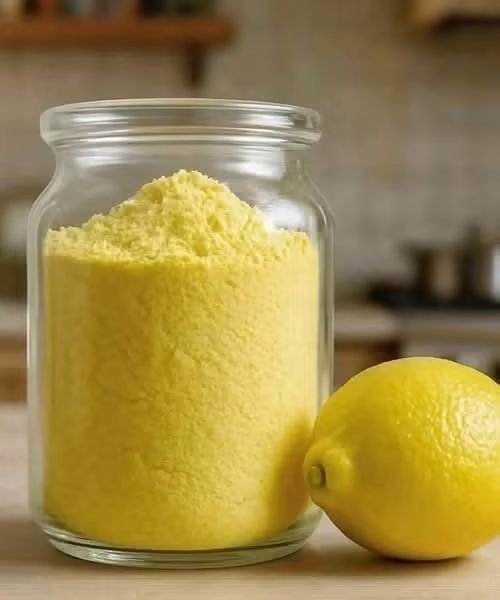
Homemade Lemon Powder
Description
Homemade lemon powder is an incredibly simple way to preserve the bright citrus flavour of fresh lemons. Made primarily from dried lemon zest and peel, this concentrated powder can be used in desserts, baked goods, marinades, salad dressings, sauces, tea, spice blends, and savoury dishes.
A tiny pinch can add an intense lemon aroma and flavour without adding extra liquid. It is especially useful when you want lemon flavour in recipes where additional juice would affect the texture.
The key to making excellent lemon powder is to remove the white pith as much as possible because the pith can make the powder noticeably bitter. Dry the lemon peel completely before grinding so the finished powder stays fine, fragrant, and shelf-stable.
Prep Time: 15 minutes
Drying Time: 2–4 hours in oven/dehydrator, or 1–3 days air-drying depending on conditions
Total Time: Varies by drying method
Yield: About 3–4 tablespoons powder from 4–5 lemons
Course: Pantry Staple / Seasoning
Difficulty: Easy
Ingredients
- 4–5 fresh organic or unwaxed lemons
- Optional: 1 extra lemon for additional zest
That’s it!
If you plan to use the powder frequently, make a larger batch using 8–10 lemons.
Equipment
- Vegetable peeler or fine grater/zester
- Sharp knife
- Baking sheet
- Parchment paper, optional
- Food dehydrator, oven, or air-drying setup
- Spice grinder, coffee grinder, or high-powered blender
- Fine-mesh sieve
- Clean, completely dry airtight jar
Instructions
1. Wash the Lemons Thoroughly
Wash the lemons under cool running water.
Gently scrub the skin to remove dirt and surface residue.
Pat the lemons completely dry with a clean towel.
If possible, choose organic or unwaxed lemons, especially when you intend to use a substantial amount of the peel.
2. Remove the lemon peel.
There are two easy methods.
Method 1: Vegetable Peeler
Use a vegetable peeler to remove very thin strips of yellow peel.
Try to remove primarily the yellow outer layer and avoid as much of the white pith underneath as possible.
Method 2: Zester
Use a fine grater or microplane to zest the lemons.
This produces very fine pieces that dry quickly and grind easily.
For making a bright yellow powder like the one shown, a vegetable peeler followed by grinding works particularly well.
3. Remove Excess White Pith
If you used a vegetable peeler and your strips contain a noticeable amount of white pith, use a small, sharp knife to gently scrape away the thick white portion.
You don’t need to remove every tiny bit, but minimising the pith helps create a more pleasantly citrussy and less bitter powder.
4. Arrange the Peel for drying.
Spread the lemon peel in a single layer on a baking sheet.
Don’t pile the pieces on top of each other.
Good airflow around the peel helps it dry evenly.
5. Oven-Drying Method
Preheat your oven to its lowest available temperature, ideally around 150–170°F (65–75°C).
Place the baking sheet in the oven.
Leave the oven door slightly ajar if your oven’s instructions and setup allow it, helping moisture escape.
Dry the lemon peel for approximately 2–4 hours, depending on the thickness of the peel and your oven temperature.
Check it periodically and turn the pieces if necessary.
The peel is ready when it is
- Completely dry
- Brittle
- Crisp
- No longer flexible
- Free from soft or moist areas
The peel should snap rather than bend.
Important
Don’t rush the process by using a very high temperature. Excessive heat can darken the peel and reduce its fresh citrus aroma.
6. Dehydrator Method
A food dehydrator is an excellent option.
Arrange the lemon peel in a single layer on the dehydrator trays.
Dry at approximately 125–135°F (52–57°C) until completely crisp.
This may take approximately 4–8 hours, depending on the thickness and moisture content.
The finished peel should be brittle and completely dry.
7. Air-Drying Method
You can also air-dry the lemon peel.
Place the peel in a single layer on a clean tray or drying rack in a dry, well-ventilated area.
Allow it to dry for approximately 1–3 days, depending on humidity and temperature.
Turn the pieces periodically.
This method works best in a dry environment.
Do not use air-drying if the peel remains damp for prolonged periods, as moisture can encourage spoilage or mould.
8. Cool Completely
Once the lemon peel is completely dry, remove it from the oven or dehydrator.
Allow it to cool completely before grinding.
This is important because warm peel can create condensation when sealed, introducing moisture into your finished powder.
9. Grind the Dried Lemon Peel
Place the completely dried lemon peel into a clean, dry spice grinder, coffee grinder, or high-powered blender.
Pulse until the peel becomes a fine powder.
Avoid running the grinder continuously for too long because friction can warm the powder and release some of its aromatic oils.
Short pulses usually work best.
10. Sift the Powder
Pass the ground lemon peel through a fine-mesh sieve.
Return any larger pieces to the grinder and process again.
Repeat until you have a fine, even powder.
Your homemade lemon powder is now ready!
11. Store Properly
Transfer the lemon powder to a completely dry, airtight glass jar.
Keep it in a cool, dark pantry away from heat, sunlight, and moisture.
Always use a completely dry spoon when removing powder from the jar.
For the best flavour and aroma, use it within several months.
If you notice moisture, clumping, mould, an unusual smell, or any other signs of spoilage, discard it.
How to Use Lemon Powder
Lemon powder is incredibly versatile.
For Desserts
Add it to:
- Cakes
- Cookies
- Muffins
- Cheesecake
- Frosting
- Glazes
- Lemon bars
- Pancakes
- Waffles
- Pudding
- Homemade ice cream
Start with ¼ teaspoon and increase according to taste.
For Savory Dishes
Use it in:
- Roasted vegetables
- Chicken seasoning
- Fish marinades
- Salad dressings
- Rice
- Pasta
- Soups
- Grain bowls
- Roasted potatoes
- Homemade spice blends
For Drinks
Add a small pinch to the following:
- Tea
- Lemonade
- Smoothies
- Sparkling water
- Homemade drink mixes
Because the flavour is concentrated, a little goes a long way.
Recipe Notes
Use only completely dry peel
This is the most important step. Any remaining moisture can shorten the shelf life of the powder.
Avoid too much pith
The white portion of the lemon peel is more bitter than the yellow zest. Removing most of it produces a brighter, cleaner citrus flavour.
Don’t burn the peel
The goal is to dry the peel, not roast it. High temperatures can cause discolouration and a bitter or burnt flavour.
Let the peel cool
Always cool the dried peel before grinding and storing.
Keep moisture away
Humidity is the biggest enemy of homemade citrus powder. Store it in an airtight container and use a dry spoon.
Helpful Tips
Choose fragrant lemons: fresh, aromatic lemons produce more flavourful powder.
Use unwaxed lemons when possible: Since you’re using the peel, this is preferable.
Make thin strips: Thin peel dries much faster and more evenly.
Don’t overcrowd the tray: Good airflow improves drying.
Grind in small batches: A spice grinder usually gives you a finer powder than a large blender.
Sift twice: If you want an exceptionally smooth powder for desserts, sift it more than once.
Label the jar: Write the date you made the powder so you can keep track of freshness.
Can You Make Lemon Powder From the Whole Lemon?
You can, but lemon peel/zest powder is generally the easiest and most flavourful version.
If you dry the entire lemon, including the pulp and pith, you’ll introduce more bitterness, and the drying process will take considerably longer.
For a bright, versatile powder like the one pictured, using the yellow peel/zest is recommended.
Nutritional Information
Because only a small amount of lemon powder is normally used at a time, the nutritional contribution per serving is quite small.
Approximate nutrition for 1 teaspoon of homemade lemon peel powder:
- Calories: 2–4
- Carbohydrates: Less than 1 g
- Fiber: Less than 1 g
- Protein: Less than 1 g
- Fat: Negligible
- Sugar: Less than 1 g
Exact values vary according to how much peel is used and how finely it is processed.
Benefits of Homemade Lemon Powder
Convenient Citrus Flavor
Lemon powder gives you concentrated lemon flavour without needing fresh lemon juice.
Helps Reduce Food Waste
Instead of throwing away lemon peel after using the juice, you can preserve the flavourful outer layer.
Easy Pantry Ingredient
Once prepared and properly stored, it can be ready whenever a recipe needs a quick citrus boost.
Contains Citrus Compounds
Lemon peel contains naturally occurring plant compounds, including flavonoids and aromatic citrus oils.
No Added Sugar
Homemade lemon powder contains no need for added sugar or preservatives.
Frequently Asked Questions
Can I use lemon zest instead of lemon peel?
Yes. In fact, finely grated lemon zest is excellent for making powder and usually contains less bitter pith.
Why is my lemon powder bitter?
The most likely reason is that too much white pith was included. Overheating the peel during drying can also create bitterness.
Why did my powder become clumpy?
Moisture is usually responsible. Make sure the peel was completely brittle before grinding and that your storage container was completely dry.
Can I use bottled lemon juice to make lemon powder?
Not for this method. Lemon powder made from peel is different from dehydrated lemon juice powder. Bottled lemon juice contains significant moisture and requires a different dehydration process.
Can I make lime powder the same way?
Absolutely. Lime peel can be dried and ground using essentially the same method.
Can I mix lemon and lime?
Yes! A lemon-lime citrus powder makes an excellent seasoning for desserts, seafood, chicken, vegetables, and drinks.
How much lemon powder equals fresh lemon zest?
As a starting point, use approximately ¼ teaspoon lemon powder for every 1 teaspoon of fresh zest, then adjust to taste because the concentration can vary depending on how finely the peel was dried and ground.
How much lemon powder should I add to a recipe?
Start small. For most dishes, ¼–½ teaspoon is enough to add noticeable lemon flavour. Desserts may require more depending on the recipe.
Can I put lemon powder in tea?
Yes. A small pinch can add a pleasant citrus aroma and flavour. Stir it well into hot tea.
Can I use lemon powder in chicken seasoning?
Definitely. Combine it with garlic powder, paprika, black pepper, oregano, and a little salt for a flavourful citrus-herb seasoning.
Can I freeze lemon powder?
You generally don’t need to freeze it if it has been properly dried and stored in an airtight container. Keeping moisture out is more important.
A Little Recipe Love
If you love simple homemade pantry recipes like this, please like, comment, save, and share this recipe with someone who would love to try it! Your support means so much and helps me keep bringing you more delicious recipes. Must express something to keep getting my recipes — thank you! ❤️🍋
Final Thoughts
Homemade lemon powder is one of those simple kitchen staples that can completely transform everyday recipes. A tiny pinch can bring bright citrus flavour to cookies, cakes, chicken, fish, vegetables, dressings, tea, and countless other dishes.