
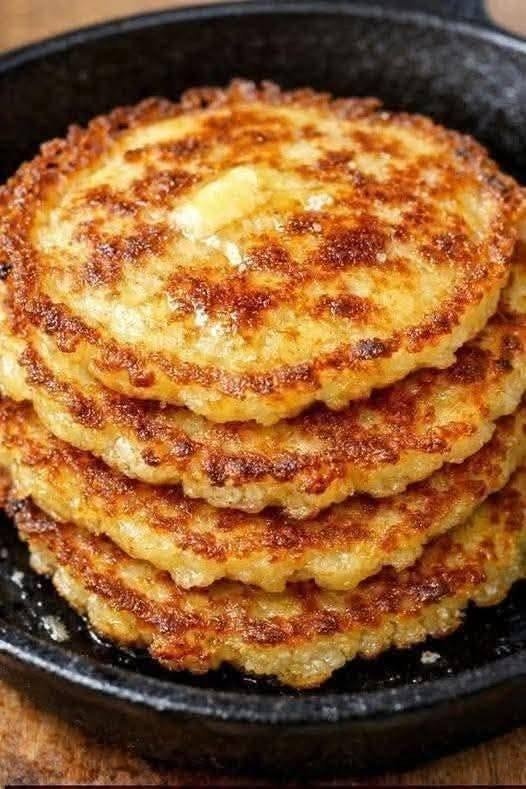
Old-Fashioned Potato Pancakes
Description
These old-fashioned potato pancakes are the kind of simple, comforting breakfast that gets passed from one generation to the next. Made with freshly grated potatoes, onion, eggs, and just enough flour to hold everything together, they’re pan-fried until beautifully golden and crisp around the edges while remaining tender and savoury inside.
They’re sometimes called potato cakes, potato fritters, or latkes depending on the family and region, but this version keeps things straightforward and homestyle. There’s no complicated equipment or unusual ingredients—just potatoes transformed into something wonderfully crispy.
The most important step is removing as much moisture as possible from the grated potatoes. Once they’re dry, they fry instead of steam, creating those irresistible browned edges. Onion adds savoury flavour, while a little garlic powder and black pepper round everything out.
Serve them straight from the skillet with sour cream, applesauce, eggs, bacon, smoked salmon, or simply a little butter. They make an excellent Sunday breakfast or brunch but are equally delicious as a dinner side.
Ingredients
For the Potato Pancakes
- 2 pounds Russet potatoes, about 4 large potatoes
- 1 small yellow onion
- 2 large eggs
- ¼ cup all-purpose flour
- 1 teaspoon salt
- ½ teaspoon freshly ground black pepper
- ½ teaspoon garlic powder
- ¼ teaspoon onion powder, optional
- 2 tablespoons chopped fresh chives or parsley, optional
- ¼ cup vegetable or avocado oil, approximately, for frying
- 1 tablespoon butter, optional, for extra flavor
For Serving
- Sour cream
- Applesauce
- Chopped chives
- Fresh parsley
- Fried or poached eggs
- Freshly cracked black pepper
Instructions
1. Prepare the Potatoes
Peel the potatoes and rinse them under cold water.
Using the large holes of a box grater, grate the potatoes into a large bowl.
You can also use the shredding attachment of a food processor.
2. Grate the Onion
Grate the onion directly into the potatoes.
Mixing the onion with the potato immediately adds flavour and can also help limit discolouration while you finish preparing the mixture.
3. Remove the Moisture
Transfer the grated potato and onion mixture to a clean kitchen towel or several layers of cheesecloth.
Gather the towel around the mixture and twist firmly over the sink.
Squeeze out as much liquid as possible.
This is arguably the most important part of the entire recipe.
Wet potatoes produce soft, steamed pancakes. Relatively dry potatoes become much crispier when they hit the hot skillet.
4. Make the Batter
Transfer the squeezed potatoes and onion to a clean mixing bowl.
Add:
- Eggs
- Flour
- Salt
- Black pepper
- Garlic powder
- Onion powder, if using
- Chopped herbs, if desired
Mix thoroughly until the potatoes are evenly coated.
The mixture should hold together when pressed with a spoon but shouldn’t resemble a wet pancake batter.
5. Heat the skillet.
Place a large cast-iron or heavy-bottomed skillet over medium to medium-high heat.
Add enough oil to lightly cover the bottom.
For additional old-fashioned buttery flavour, add about a teaspoon of butter to the oil.
Wait until the oil is hot before adding the potatoes.
6. Form the Pancakes
Scoop approximately ¼ cup of potato mixture into the skillet for each pancake.
Use the back of your spoon or spatula to gently flatten each mound into a round pancake approximately ½ inch thick.
Don’t make them excessively thick, or the exterior may brown before the centre cooks.
7. Fry Until Golden
Cook for approximately 3–5 minutes on the first side.
Avoid constantly moving the pancakes. Leaving them undisturbed allows a golden crust to develop.
Once the bottom is deeply golden brown, carefully turn with a wide spatula.
8. Cook the Second Side
Cook for another 3–4 minutes, or until the second side is golden and the potato is tender inside.
Adjust the heat if they’re browning too quickly.
9. Drain
Transfer the cooked potato pancakes to a wire rack placed over a baking sheet.
A wire rack is better than stacking them on paper towels because air can circulate underneath, helping the bottoms remain crisp.
Immediately sprinkle with a tiny pinch of salt if desired.
10. Continue Cooking
Repeat with the remaining potato mixture, adding additional oil as needed.
Stir the raw mixture before each batch because a little moisture may collect at the bottom of the bowl.
11. Keep Them Warm
If making several batches, place finished pancakes on a wire rack in a 250°F (120°C) oven.
This keeps them hot and crisp while you finish cooking.
12. Serve
Serve immediately with your favourite toppings.
For a classic breakfast, add sour cream, fresh chives, and eggs.
For a sweet-savoury combination, serve with applesauce.
Notes
Russet potatoes work particularly well because their relatively high starch content helps create crispy pancakes.
Yukon Gold potatoes can also be used. They produce a slightly creamier interior and buttery flavour, although the exterior may not become quite as crisp.
The amount of flour needed can vary depending on how thoroughly the potatoes are drained. Start with ¼ cup. If the mixture refuses to hold together, add another tablespoon.
Don’t leave the grated potatoes sitting in liquid for an extended period. Work reasonably quickly after grating them.
The pancakes taste best directly from the skillet. If you need to prepare many portions, keep them on a wire rack in a low oven rather than stacking them.
Tips for the Crispiest Potato Pancakes
Squeeze, Then Squeeze Again
When you think you’ve removed enough moisture from the potatoes, squeeze them once more.
The drier the potato mixture, the better the browning.
Don’t Crowd the Skillet
Leave space around each pancake.
Overcrowding lowers the pan temperature and traps steam, which makes the pancakes softer.
Get the Oil Hot First
If the oil isn’t hot enough, the potatoes may absorb excessive oil before developing a crust.
At the same time, don’t allow the oil to smoke.
Flatten the Pancakes
Thinner pancakes provide more surface area for browning and are easier to cook through.
Don’t Flip Too Early
Wait until you can see a golden-brown crust around the bottom edges.
Trying to turn the pancake prematurely can cause it to fall apart.
Use a Cast-Iron Skillet
Cast iron maintains heat particularly well and creates beautiful browning. A heavy stainless-steel skillet also works.
Keep Cooked Pancakes Uncovered
Covering them traps steam and softens the crust.
Variations
Cheesy Potato Pancakes
Add ½ cup shredded sharp cheddar cheese to the potato mixture.
Cheddar melts during cooking and creates extra-crispy, cheesy edges similar to the deeply browned pancakes in the photo.
Parmesan Potato Pancakes
Add ⅓ cup freshly grated Parmesan for a savoury, slightly salty variation.
Garlic & Herb Potato Pancakes
Add two finely minced garlic cloves along with fresh parsley, dill, or chives.
Loaded Potato Pancakes
Mix in cheddar, green onions, and cooked crumbled bacon.
Serve with sour cream for a loaded-baked-potato-inspired version.
Spicy Potato Pancakes
Add finely chopped jalapeño, cayenne pepper, or crushed red pepper flakes.
Zucchini Potato Pancakes
Replace approximately one-quarter of the potato with shredded zucchini. Squeeze the zucchini extremely well before adding it because it contains substantial moisture.
Serving Suggestions
For a traditional breakfast or brunch, serve the potato pancakes alongside scrambled, fried, or poached eggs.
They’re also excellent with:
- Sour cream and chives
- Unsweetened applesauce
- Smoked salmon
- Greek yogurt
- Crispy bacon
- Breakfast sausage
- Avocado
- Fresh tomato salad
- Roasted vegetables
For dinner, use them as an alternative to roasted or mashed potatoes alongside chicken, steak, pork, or fish.
You can even make smaller pancakes and serve them as appetisers topped with sour cream, smoked salmon, and fresh dill.
Prep Time
20 minutes
Cook Time
25 minutes
Total Time
45 minutes
Servings
Makes approximately 10–12 pancakes
Serves 4–6
Nutritional Information
Approximate Nutrition Per Serving
Based on 6 servings:
- Calories: 245
- Protein: 6 g
- Carbohydrates: 35 g
- Fat: 10 g
- Saturated Fat: 2 g
- Fiber: 3 g
- Sugar: 2 g
- Sodium: 410 mg
- Potassium: 690 mg
- Iron: 2 mg
Nutrition values are approximate. The amount of oil absorbed during frying and any toppings will significantly affect the final values.
Benefits
Although potato pancakes are comfort food rather than a specialised “health food”, they can still contribute several nutrients as part of a balanced meal.
Potatoes Provide Potassium
Potatoes are naturally rich in potassium, an essential mineral involved in normal muscle and nerve function.
Carbohydrates for Energy
Potatoes provide carbohydrates, which are an important energy source for the body.
Some Dietary Fiber
Potatoes and onions contribute fibre. Leaving some or all of the clean potato skin on can increase the fibre content slightly.
Eggs Add Protein
Eggs help bind the pancakes while contributing protein and several vitamins and minerals.
Onions Add Flavour Naturally
Fresh onion creates plenty of savoury flavour without requiring complicated sauces or seasonings.
Easy to Pair With Protein
Serving potato pancakes with eggs, Greek yoghurt, smoked salmon, chicken, or another protein source can create a more substantial meal.
Make-Ahead Instructions
These pancakes are best freshly fried, but they can be prepared ahead.
Cook them normally and allow them to cool completely on a wire rack.
Place parchment paper between the pancakes and refrigerate them in an airtight container for up to 3–4 days.
To reheat, place them in a 400°F (200°C) oven for approximately 8–10 minutes.
An air fryer also works exceptionally well because it helps restore the crispy exterior.
Avoid reheating them covered if crispiness is your priority.
Freezing Instructions
Potato pancakes freeze surprisingly well.
Let the cooked pancakes cool completely.
Arrange them in a single layer on a baking sheet and freeze until firm.
Transfer them to a freezer-safe container with parchment paper between layers.
Reheat directly from frozen in a hot oven or air fryer until heated through and crispy.
Q&A
What are these called?
They’re commonly known as potato pancakes, although similar dishes may also be called potato cakes, potato fritters, or latkes depending on preparation and regional tradition.
Why do my potato pancakes fall apart?
The potatoes may contain too much moisture, or the mixture may need slightly more egg or flour to bind it.
Squeezing the grated potatoes thoroughly is usually the best place to start.
Why aren’t mine crispy?
Excess moisture, overcrowding the skillet, insufficiently hot oil, and making the pancakes too thick are the most common causes.
Can I use leftover mashed potatoes?
Yes, but that creates a different style of potato cake. Mix cold mashed potatoes with egg, flour, seasonings, and optional cheese before pan-frying.
Can I add cheese?
Absolutely. Sharp cheddar is particularly delicious. Add approximately ½ cup to the batter for cheesy, deeply browned edges.
Can I make these gluten-free?
Yes. Substitute a suitable gluten-free all-purpose flour or use a small amount of potato starch.
Can I bake them instead?
Yes. Brush or spray both sides lightly with oil and bake at 425°F (220°C), turning once, until browned and crisp. Pan-frying generally produces the most traditional texture.
Can I air-fry potato pancakes?
Yes. Lightly spray them with oil and arrange them without overlapping. Air-fry until golden and cooked through, flipping midway. Exact cooking time varies by appliance and pancake thickness.
What’s the traditional topping?
Sour cream and applesauce are two classic choices. Fresh chives or dill also pair beautifully with savoury potato pancakes.
What is the secret to really good old-fashioned potato pancakes?
Three things make the biggest difference: remove as much water as possible from the grated potatoes, start with a properly heated skillet, and don’t overcrowd the pan. Those simple steps produce pancakes with deeply golden, crisp edges and soft, tender potato centres—the kind that disappear almost as quickly as they come out of the skillet.