
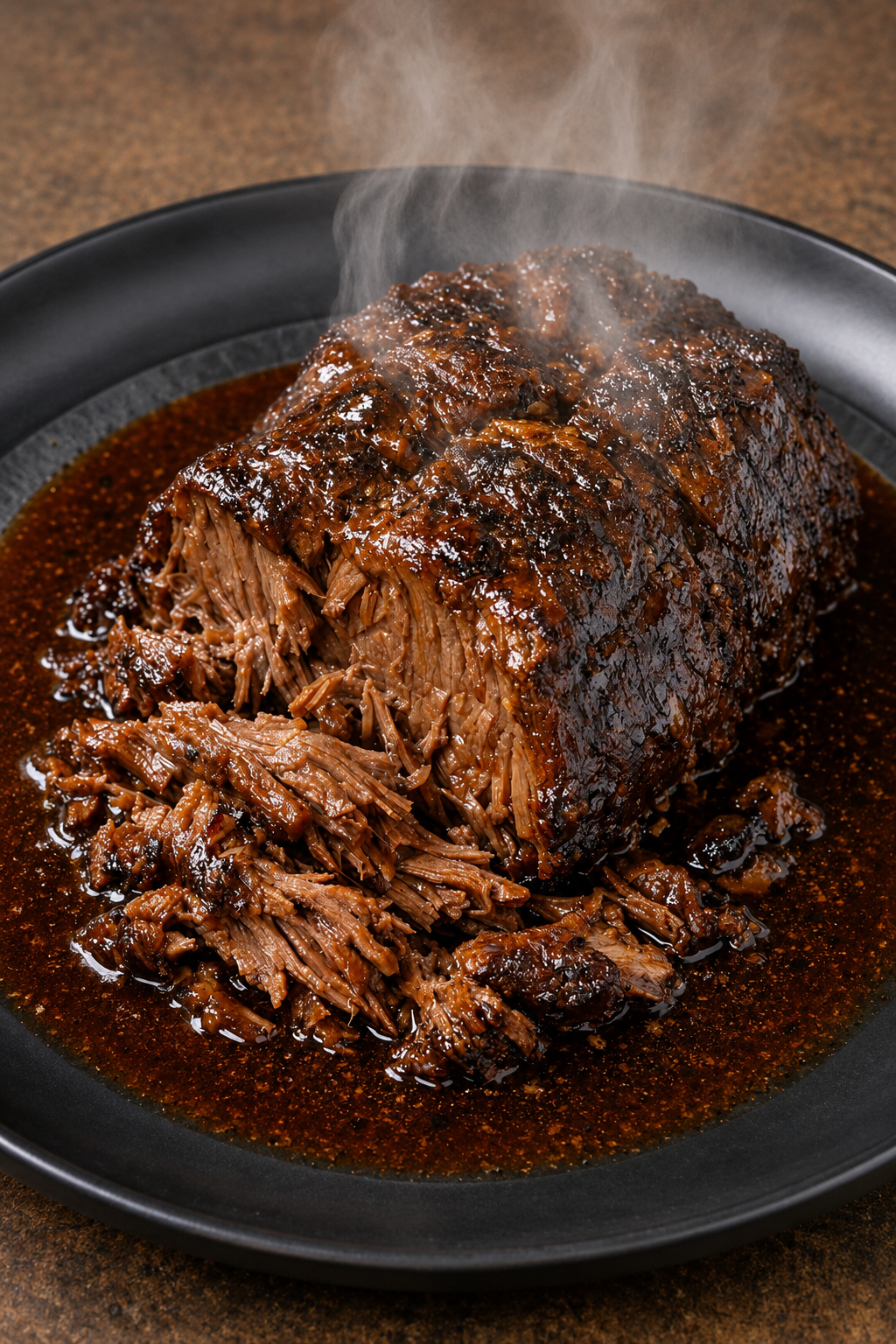
Slow Cooker Beef Pot Roast with Rich Gravy
Description
This Slow Cooker Beef Pot Roast with Rich Gravy is classic comfort food featuring an incredibly tender beef chuck roast slowly cooked in a deeply savory, flavorful gravy. The long, gentle cooking process transforms an affordable cut of beef into fork-tender meat that practically falls apart when served. A combination of beef broth, Worcestershire sauce, tomato paste, garlic, onion, herbs, and seasonings creates a rich cooking liquid that develops even more flavor as the roast cooks. At the end, a simple cornstarch slurry turns those delicious juices into a glossy homemade gravy. This recipe is perfect for Sunday dinner, family gatherings, holidays, or busy days when you want a hearty dinner waiting for you. Serve the beef with creamy mashed potatoes, roasted vegetables, buttered noodles, or warm dinner rolls to soak up every drop of gravy.
Ingredients For the Beef Roast
- 3–4 lb boneless beef chuck roast
- 1½ tsp salt
- 1 tsp freshly ground black pepper
- 1 tsp garlic powder
- 1 tsp onion powder
- 1 tsp smoked paprika
- 2 tbsp olive oil
For the Slow Cooker Gravy
- 1 large yellow onion, sliced
- 4 garlic cloves, minced
- 2½ cups low-sodium beef broth
- 2 tbsp Worcestershire sauce
- 2 tbsp tomato paste
- 1 tbsp Dijon mustard
- 1 tsp dried thyme
- 1 tsp dried rosemary
- ½ tsp dried oregano
- 1 bay leaf
For Thickening
- 3 tbsp cornstarch
- 3 tbsp cold water
- 1 tbsp unsalted butter, optional
For Serving
- Fresh chopped parsley
- Mashed potatoes, optional
- Roasted carrots or green beans, optional
Step-by-Step Instructions
- Pat the chuck roast thoroughly dry with paper towels. Removing excess moisture helps the exterior brown properly.
- Combine salt, black pepper, garlic powder, onion powder, and smoked paprika in a small bowl. Rub the seasoning generously over all sides of the beef.
- Heat olive oil in a large skillet over medium-high heat.
- Add the seasoned roast and sear for approximately 3–4 minutes per side, until a deep brown crust develops. Searing isn’t essential for cooking the meat safely, but it adds significant flavor.
- Place the sliced onion across the bottom of a 6-quart slow cooker.
- Transfer the seared roast to the slow cooker and position it over the onions.
- Add the minced garlic around the beef.
- In a mixing bowl, whisk together beef broth, Worcestershire sauce, tomato paste, Dijon mustard, thyme, rosemary, and oregano.
- Pour the mixture around and over the roast. Add the bay leaf.
- Cover and cook on LOW for 8–9 hours or HIGH for approximately 5–6 hours, until the beef is extremely tender and easily pulls apart with a fork.
- Carefully transfer the finished roast to a serving platter and loosely cover it with foil.
- Remove and discard the bay leaf.
- To prepare the gravy, whisk the cornstarch and cold water together in a small bowl until completely smooth.
- Stir the slurry into the hot cooking liquid in the slow cooker.
- Cover and cook on HIGH for approximately 10–15 minutes, stirring occasionally, until the gravy thickens.
- For an extra-rich finish, stir one tablespoon of butter into the gravy.
- Taste and adjust the salt and black pepper as necessary.
- Pull the roast into large tender pieces using two forks or slice it carefully against the grain.
- Return some of the beef to the gravy or arrange it on a platter and generously spoon the hot gravy over the top.
- Garnish with chopped parsley and serve immediately.
Tips
- Choose chuck roast: Its marbling and connective tissue make it ideal for long, slow cooking.
- Don’t rush the cooking: If your roast is still tough, it often needs additional cooking time rather than less.
- Sear for extra flavor: Browning creates a deeper, richer finished gravy.
- Use low-sodium broth: Worcestershire sauce and other seasonings already contribute salt.
- Keep the lid closed: Opening the slow cooker repeatedly releases heat and can extend cooking time.
- Thicken at the end: Cornstarch should be mixed with cold water before adding it to hot liquid to prevent lumps.
- For additional flavor, mushrooms can be added during the final 1–2 hours.
Notes
The exact cooking time depends on the size and thickness of the roast and your individual slow cooker. The beef is ready when it pulls apart easily rather than simply when a particular amount of time has passed. Store leftovers with some gravy in an airtight container in the refrigerator for up to 3–4 days. Keeping the meat in gravy helps it stay moist. Reheat gently on the stovetop or microwave until thoroughly hot. Leftover beef is also delicious in sandwiches, tacos, wraps, or over baked potatoes.
Q&A
Why is my slow cooker roast still tough?
Chuck roast needs enough time for its connective tissue to soften. If it remains difficult to pull apart, continue cooking and check it again later.
Can I cook vegetables with the roast?
Yes. Carrots, potatoes, mushrooms, and celery are excellent additions. Place firm root vegetables beneath or around the roast.
Can I skip searing the beef?
Yes. The roast will still cook, but searing adds a deeper roasted flavor and more attractive exterior.
Can I prepare this the night before?
Yes. Prepare the ingredients and refrigerate them separately as needed, then assemble in the slow cooker before cooking. Avoid placing a refrigerator-cold slow-cooker insert directly into a heated base unless your manufacturer’s instructions specifically allow it.
What should I serve with pot roast?
Mashed potatoes, egg noodles, roasted potatoes, green beans, carrots, broccoli, or crusty dinner rolls all pair beautifully with the rich gravy.
Servings
Serves 6–8
Nutrition (Approx. Per Serving, Based on 8 Servings)
- Calories: 440
- Protein: 43g
- Carbohydrates: 9g
- Fat: 26g
- Saturated Fat: 9g
- Fiber: 1g
- Sugar: 3g
- Sodium: 590mg
- Cholesterol: 135mg
- Potassium: 690mg
- Iron: 24% DV
- Calcium: 5% DV
Nutritional values are estimates and may vary depending on the size and fat content of the roast, broth, gravy, and serving size.