
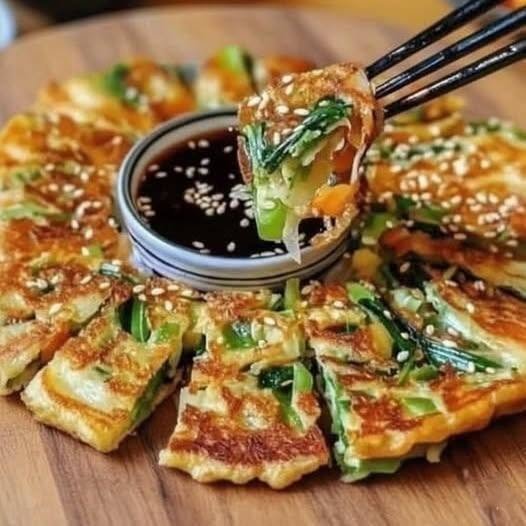
Crispy Vegetable Pancakes with Asian Dipping Sauce Recipe
Description
Crispy Vegetable Pancakes with Asian Dipping Sauce are a delicious way to turn everyday vegetables into golden, crunchy pancakes packed with fresh flavour. Shredded zucchini, carrot, and cabbage create a colourful vegetable base, while flour and eggs bind everything together into pancakes that become beautifully crisp around the edges and tender in the centre.
Inspired by savoury Asian-style vegetable pancakes, this recipe is easy enough for a quick weekday lunch yet flavourful enough to serve as an appetiser or party snack. The vegetables provide plenty of texture, while garlic, sesame oil, and optional green onions add savoury depth. The accompanying dipping sauce combines soy sauce, rice vinegar, sesame oil, garlic, and a touch of sweetness for the perfect balance of salty, tangy, savoury, and slightly sweet flavours.
One of the most important secrets to achieving crispy pancakes is removing as much moisture as possible from the zucchini. Once that step is done, the batter comes together quickly, and the pancakes need only a few minutes per side in a hot skillet.
Serve them immediately while the edges are still crisp, alongside the homemade Asian dipping sauce.
Ingredients
For the Pancakes:
- 1 cup shredded zucchini
- 1 cup shredded carrot
- ½ cup finely shredded cabbage
- ¼ cup green onions, chopped, optional
- ½ cup all-purpose flour or gluten-free all-purpose flour
- 2 large eggs
- 2 tablespoons cornstarch
- 1 clove garlic, finely minced
- 1 teaspoon soy sauce
- ½ teaspoon toasted sesame oil
- ½ teaspoon salt
- ¼ teaspoon freshly ground black pepper
- ¼ teaspoon red pepper flakes, optional
- 2–4 tablespoons water, if needed
- 2–3 tablespoons neutral cooking oil, for frying
- Sesame seeds, for garnish, optional
- Additional sliced green onions, for serving
For the Asian Dipping Sauce:
- 3 tablespoons low-sodium soy sauce
- 1½ tablespoons rice vinegar
- 1 teaspoon toasted sesame oil
- 1 teaspoon honey or brown sugar
- 1 teaspoon fresh lime juice
- 1 small garlic clove, finely minced
- ½ teaspoon freshly grated ginger
- ¼ teaspoon red pepper flakes or chili flakes
- 1 teaspoon sesame seeds
- 1 tablespoon finely sliced green onion
Instructions
Step 1: Prepare the Zucchini
Shred the zucchini using the large holes of a box grater. Place it in a clean kitchen towel or several layers of paper towels.
Gather the towel around the zucchini and squeeze firmly over the sink to remove as much liquid as possible. Continue squeezing until very little water comes out.
This step is extremely important. Zucchini naturally contains a lot of water, and excess moisture can make the pancake batter watery and prevent the pancakes from becoming properly crispy.
Transfer the squeezed zucchini to a large mixing bowl.
Step 2: Prepare the Remaining Vegetables
Shred the carrots and finely shred the cabbage. Try to keep the vegetable pieces relatively thin so they soften during the short cooking time.
Add the carrot, cabbage, and chopped green onions to the bowl containing the zucchini.
Gently toss everything together until the vegetables are evenly distributed.
Step 3: Prepare the Batter
Add the flour and cornflour to the vegetables. Toss until the vegetables are lightly coated.
In a separate small bowl, whisk together the eggs, soy sauce, sesame oil, minced garlic, salt, black pepper, and red pepper flakes.
Pour the egg mixture over the vegetables.
Stir until everything is evenly combined.
The mixture should be moist enough to hold together when pressed with a spoon but should not resemble a thin traditional pancake batter.
If it feels extremely dry, add water one tablespoon at a time. You may not need any additional water depending on how much moisture remains in your vegetables.
Allow the mixture to rest for approximately 5 minutes.
Step 4: Make the Dipping Sauce
While the pancake mixture rests, prepare the Asian dipping sauce.
Add the soy sauce, rice vinegar, sesame oil, honey or brown sugar, lime juice, minced garlic, grated ginger, chilli flakes, sesame seeds, and sliced green onion to a small bowl.
Whisk until the honey or sugar has completely dissolved.
Taste the sauce. Add a little more vinegar for extra tanginess or chilli flakes if you prefer more heat.
Set aside while cooking the pancakes.
Step 5: Heat the Skillet
Place a large nonstick or well-seasoned skillet over medium to medium-high heat.
Add approximately 1 tablespoon of cooking oil and allow it to become hot.
The skillet needs to be properly heated before adding the batter. If the oil isn’t hot enough, the pancakes may absorb too much oil rather than developing crisp edges.
Step 6: Form the Pancakes
Scoop approximately ¼ cup of the vegetable mixture into the skillet.
Use the back of a spoon or spatula to gently flatten the mixture into a thin pancake approximately 3–4 inches wide.
Depending on the size of your skillet, cook two or three pancakes at a time.
Avoid overcrowding the skillet because this can lower the temperature and cause the pancakes to steam.
Step 7: Cook Until Golden and Crispy
Cook the pancakes for approximately 3–4 minutes on the first side.
Avoid moving them too soon. Allowing them to remain in contact with the hot skillet helps create the crisp, deeply golden surface.
Once the underside is golden brown and the pancake feels firm enough to flip, carefully turn it using a thin spatula.
Cook for another 2–4 minutes on the second side until golden, crisp, and cooked through.
Transfer the cooked pancakes to a plate lined with paper towels or, preferably, a wire cooling rack. A wire rack helps maintain their crispness by preventing steam from collecting underneath.
Repeat with the remaining vegetable mixture, adding more oil to the skillet when necessary.
Step 8: Garnish and Serve
Arrange the freshly cooked vegetable pancakes on a serving platter.
Sprinkle with sliced green onions and sesame seeds if desired.
Serve immediately with the Asian dipping sauce on the side.
For the best experience, enjoy them while they’re still hot and crispy.
Tips for Perfect Crispy Vegetable Pancakes
Remove Excess Zucchini Moisture
This is probably the most important tip in the entire recipe. Wet zucchini produces wet batter. Squeeze the shredded zucchini thoroughly before combining it with the remaining ingredients.
Keep the pancakes thin.
Thick pancakes may become golden outside while remaining overly soft inside. Flatten each portion into a relatively thin layer so the vegetables cook evenly.
Use cornflour.
Adding a small amount of cornflour alongside the flour helps produce a lighter and crispier exterior.
Preheat Your Skillet
Always let your skillet and oil become hot before adding the vegetable mixture.
Don’t Overcrowd the Pan
Cook the pancakes in batches. Leaving some space between them allows moisture to escape and promotes browning.
Don’t Flip Too Early
Wait until you can see golden edges developing before attempting to flip the pancake. If it begins falling apart, it probably needs another minute.
Serve Immediately
Like most fried or pan-fried foods, vegetable pancakes have their best texture shortly after cooking.
Use a wire rack.
Instead of stacking freshly cooked pancakes directly on a plate, transfer them to a wire rack. Stacking can trap steam and soften their crispy surfaces.
Notes
The amount of moisture in vegetables can vary significantly. Because of this, you may need to slightly adjust the flour or water.
If your mixture appears too wet after resting, add another tablespoon of flour or cornflour.
If it seems too dry to hold together, add one tablespoon of water at a time.
Gluten-free all-purpose flour can replace regular flour. Choose a blend designed as a 1:1 substitute for standard all-purpose flour.
The dipping sauce can be prepared several hours in advance and refrigerated until needed.
For a less spicy sauce, simply leave out the red pepper flakes.
Serving Suggestions
These crispy pancakes are versatile enough to work as an appetiser, snack, lunch, or vegetable side dish.
Serve them with the Asian dipping sauce and a fresh cucumber salad for a light meal.
For something more substantial, pair them with grilled chicken, baked salmon, shrimp, tofu, steamed rice, or an Asian-inspired noodle dish.
You can also make smaller bite-size pancakes for parties. Place them on a large serving platter with individual bowls of dipping sauce.
Servings
This recipe makes approximately 8–10 small vegetable pancakes and serves about 4 people as an appetiser or side dish.
As a light main course, it will generally serve 2–3 people.
Prep Time: 20 minutes
Cook Time: 20 minutes
Total Time: 40 minutes
Nutritional Information
Approximate nutrition per serving, based on 4 servings:
- Calories: 230
- Protein: 7g
- Carbohydrates: 25g
- Fat: 12g
- Saturated Fat: 2g
- Fiber: 3g
- Sugar: 5g
- Sodium: 590mg
- Cholesterol: 93mg
Nutrition will vary depending on the exact ingredients, amount of oil absorbed during cooking, serving size, and dipping sauce consumed.
Benefits
These vegetable pancakes offer a convenient and enjoyable way to include several vegetables in one dish.
Variety of Vegetables
Zucchini, carrots, cabbage, and green onions provide different textures, colours, and naturally occurring nutrients. Using several vegetables also makes the pancakes more satisfying than a flour-heavy version.
Source of Fiber
The vegetables contribute dietary fibre. Fibre forms an important part of a balanced diet and also helps make meals more filling.
Protein from Eggs
Eggs help bind the pancakes while contributing protein and other nutrients.
Easy Vegetable-Based Meal
People who find plain cooked vegetables unexciting may enjoy them more when prepared in a crispy savoury pancake.
Customizable Ingredients
You can easily adjust the vegetables based on what’s already available in your refrigerator. Thinly sliced bell peppers, shredded sweet potato, mushrooms, bean sprouts, or finely chopped spinach can be incorporated in moderate quantities.
Q&A
Can I make these vegetable pancakes gluten-free?
Yes. Replace the all-purpose flour with a gluten-free all-purpose flour blend. Check the soy sauce as well because traditional soy sauce can contain wheat. Use certified gluten-free tamari if necessary.
Why are my vegetable pancakes soggy?
The most common reason is excess moisture. Make sure you squeeze the shredded zucchini very thoroughly. A skillet that isn’t hot enough or overcrowding the pan can also cause the pancakes to steam instead of becoming crispy.
Can I prepare the batter ahead of time?
It’s better to cook the pancakes shortly after preparing the mixture. Salt draws moisture from vegetables as they sit, so the batter can become increasingly watery.
You can shred the vegetables ahead of time and refrigerate them separately. Combine them with the remaining ingredients shortly before cooking.
Can I make them without green onions?
Yes. Green onions add extra savoury flavour but aren’t essential to the structure of the pancakes.
What other vegetables can I add?
Finely shredded sweet potato, bell pepper, mushrooms, spinach, bean sprouts, or broccoli stems can work. Avoid adding too many watery vegetables unless their excess moisture is removed.
Can I bake these pancakes instead of frying them?
Yes, although the texture will be different. Arrange flattened portions on a parchment-lined or lightly greased baking sheet. Lightly brush or spray the tops with oil and bake at 425°F (220°C) until golden, flipping once during cooking.
Can I cook them in an air fryer?
Yes. Form smaller, relatively thin pancakes and place them in a lightly greased air fryer basket without overlapping. Lightly spray the tops with oil and air fry at approximately 375°F (190°C), turning once, until golden and cooked through. Exact cooking time depends on the air fryer and thickness.
How do I reheat leftover pancakes?
Avoid the microwave if maintaining crispness is important. Reheat the pancakes in a skillet, air fryer, or oven until hot and crispy again.
How long do leftovers keep?
Allow leftover pancakes to cool completely before placing them in an airtight container. Refrigerate for up to 3 days. Store the dipping sauce separately.
Can I freeze vegetable pancakes?
Yes. Cool the cooked pancakes completely, arrange them in a single layer to freeze initially, and then transfer them to a freezer-safe container with parchment paper between layers. Reheat them directly from frozen in the oven or air fryer until thoroughly heated and crispy.
Can I make the dipping sauce sweeter?
Yes. Add another teaspoon of honey or brown sugar. For a sharper sauce, increase the rice vinegar or lime juice instead.
Final Notes
Crispy Vegetable Pancakes with Asian Dipping Sauce are at their best when there’s a strong contrast between their crunchy golden exterior and tender vegetable-filled centre. The combination of zucchini, carrots, cabbage, and green onions creates plenty of texture without requiring complicated ingredients.
The key is controlling moisture, keeping each pancake relatively thin, and cooking in a properly heated skillet. Pair them with the tangy sesame-soy dipping sauce, garnish with fresh green onions and sesame seeds, and serve them straight from the pan for maximum crispness.