
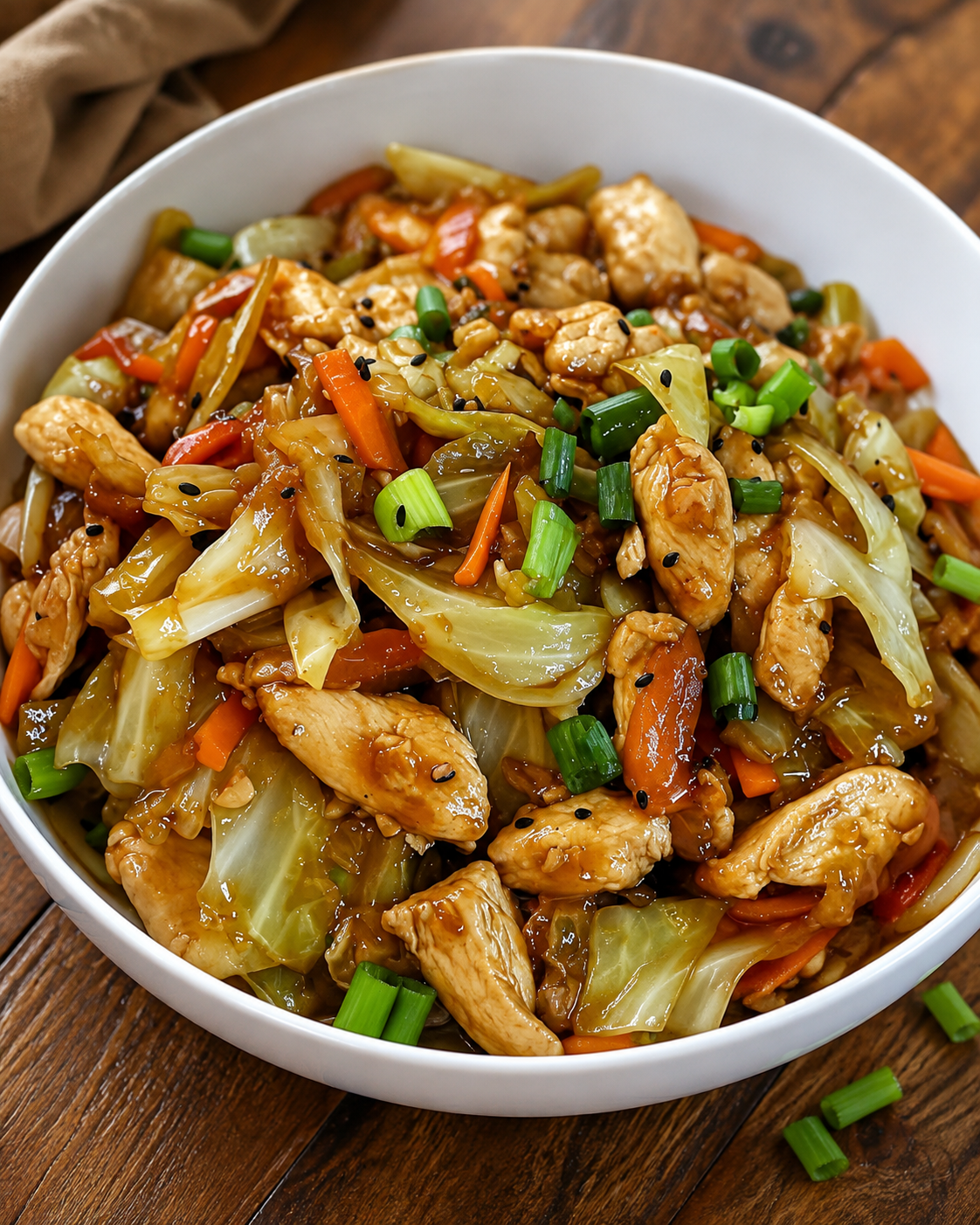
Chicken Cabbage Stir-Fry
This chicken and cabbage stir-fry is a quick, flavourful, and satisfying meal made with tender chicken breast, crisp cabbage, colourful bell pepper, carrots, garlic, and ginger. Everything comes together in one skillet or wok with a savoury soy-based sauce.
It’s perfect for busy weeknights because the ingredients cook quickly and the entire meal can be on the table in about 30 minutes. The cabbage adds plenty of texture and volume, while the chicken provides a satisfying source of protein. Serve it on its own for a lighter meal or pair it with rice, noodles, or cauliflower rice.
Recipe Overview
Recipe Name: Chicken Cabbage Stir-Fry
Prep Time: 15 minutes
Cook Time: 15 minutes
Total Time: 30 minutes
Servings: 4
Course: Main Dish
Cuisine: Asian-inspired
Difficulty: Easy
Ingredients
For the Stir-Fry
- 1 lb (450 g) chicken breast, thinly sliced
- 4 cups green cabbage, shredded
- 1 bell pepper, sliced
- 2 carrots, julienned
- 3 cloves garlic, minced
- 1 tablespoon fresh ginger, minced
- 3 tablespoons soy sauce
- 1 tablespoon oyster sauce, optional
- 2 tablespoons vegetable oil
- Salt, to taste
- Black pepper, to taste
- 1–2 teaspoons sesame seeds, for garnish
- 2–3 green onions, chopped, for garnish
Optional Additions
- 1 teaspoon sesame oil
- ½ teaspoon red pepper flakes
- 1 tablespoon honey
- 1 teaspoon rice vinegar
- Sliced mushrooms
- Snow peas
- Broccoli
- Baby corn
- Water chestnuts
- Chili garlic sauce
How to Make Chicken Cabbage Stir-Fry
Step 1: Prepare the Chicken
Start by slicing the chicken breast into thin, bite-sized strips.
For easier slicing, place the chicken in the freezer for approximately 15–20 minutes before cutting. This firms it up slightly and makes it much easier to slice thinly and evenly.
Pat the chicken dry with paper towels.
Season lightly with black pepper.
Be careful with salt at this stage because soy sauce and oyster sauce already contain sodium.
Step 2: Prepare the Vegetables
Shred the cabbage into thin strips.
Slice the bell pepper into thin pieces.
Julienne the carrots into matchsticks.
Mince the garlic and ginger.
Chop the green onions and keep the green tops for garnish.
Because stir-frying happens quickly, it’s important to have all the vegetables prepared before you turn on the heat.
This is known as mise en place, and it makes stir-frying much easier.
Step 3: Prepare the Sauce
In a small bowl, combine:
- 3 tablespoons soy sauce
- 1 tablespoon oyster sauce, if using
- 1 teaspoon rice vinegar, optional
- 1 teaspoon honey, optional
- 1 teaspoon sesame oil, optional
- A pinch of black pepper
Whisk together and set aside.
If you prefer a simpler stir-fry, you can use only the soy sauce and oyster sauce.
Step 4: Heat the Pan
Place a large skillet, wok, or sauté pan over medium-high to high heat.
Allow the pan to become hot before adding the oil.
Add 1 tablespoon of vegetable oil.
The pan should be hot enough that the chicken begins sizzling immediately when added.
Step 5: Cook the Chicken
Add the sliced chicken to the hot pan in a single layer.
Try not to overcrowd the pan.
Cook for approximately 3–5 minutes, stirring or tossing occasionally, until the chicken is browned on the outside and cooked through.
The chicken should reach an internal temperature of 165°F (74°C).
Remove the cooked chicken from the pan and place it on a clean plate.
Keeping the chicken separate temporarily prevents it from becoming overcooked while the vegetables stir-fry.
Step 6: Cook the Garlic and Ginger
Add the remaining tablespoon of vegetable oil to the pan.
Add the minced garlic and ginger.
Stir-fry for approximately 20–30 seconds, just until fragrant.
Don’t let the garlic burn because burnt garlic can become bitter.
Step 7: Add the Carrots and Bell Pepper
Add the julienned carrots and sliced bell pepper.
Stir-fry for approximately 2–3 minutes.
The vegetables should begin to soften while retaining some crunch.
Keeping the heat high helps the vegetables cook quickly without becoming soggy.
Step 8: Add the Cabbage
Add the shredded cabbage.
It may look like a lot initially, but cabbage cooks down considerably.
Use tongs or a large spatula to toss everything together.
Cook for approximately 3–5 minutes.
The cabbage should become slightly tender while retaining some texture.
Avoid cooking it until completely soft.
A little crunch makes the stir-fry much more enjoyable.
Step 9: Return the Chicken
Return the cooked chicken to the skillet.
Toss everything together.
Pour the prepared sauce over the chicken and vegetables.
Stir continuously for approximately 1–2 minutes, allowing the sauce to coat everything evenly.
Taste and adjust the seasoning.
Add a little more soy sauce if necessary, or a splash of rice vinegar if you want more brightness.
Step 10: Add Optional Heat
If you enjoy spicy food, add:
- Red pepper flakes
- Chili garlic sauce
- Sliced fresh chili
- Sriracha
Start with a small amount and increase according to taste.
Step 11: Garnish and Serve
Remove the pan from the heat.
Sprinkle with sesame seeds and chopped green onions.
For extra flavour, add a few drops of toasted sesame oil just before serving.
Serve immediately while hot.
Why You’ll Love This Chicken Stir-Fry
Protein-Packed
Chicken breast provides a lean source of protein that makes the dish satisfying.
Loaded With Vegetables
Cabbage, carrots, and bell peppers add colour, crunch, and variety.
Quick and Easy
Most of the work is simply slicing and stir-frying.
One-Pan Meal
Everything comes together in one wok or skillet, making cleanup easy.
Easy to Customize
You can make it milder, spicier, sweeter, tangier, or more savoury depending on your preferences.
Important Recipe Notes
Slice Chicken Thinly
Thin chicken slices cook quickly and evenly.
If the pieces are too thick, the outside may cook before the centre is done.
Don’t Overcrowd the Pan
If your skillet is too crowded, the chicken and vegetables will release moisture and begin steaming rather than stir-frying.
Cook in batches if necessary.
Keep the Heat High
Stir-frying works best over medium-high to high heat.
Add Vegetables in Stages
Harder vegetables such as carrots need more time than cabbage, so add them first.
Don’t Overcook the cabbage.
Cabbage should remain slightly crisp.
Overcooking can make it watery and soft.
Tips for the Best Results
1. Prepare Everything First
Once you start cooking, the process moves quickly.
Have the chicken, vegetables, aromatics, and sauce ready before heating the pan.
2. Use Fresh Ginger
Fresh ginger gives the stir-fry a brighter and more aromatic flavour than powdered ginger.
3. Use a Large Pan
A large wok or skillet gives the ingredients enough space to brown properly.
4. Don’t Add Too Much Sauce
The goal is to coat the ingredients, not drown them.
5. Taste Before Adding Salt
Soy sauce and oyster sauce can be salty, so taste the finished dish before adding additional salt.
Serving Suggestions
Serve chicken cabbage stir-fry with:
- Steamed white rice
- Brown rice
- Jasmine rice
- Cauliflower rice
- Quinoa
- Rice noodles
- Egg noodles
For a lighter meal, serve it on its own or over cauliflower rice.
For a heartier dinner, serve it with steamed jasmine rice.
Delicious Variations
Spicy Chicken Cabbage Stir-Fry
Add red pepper flakes, chilli garlic sauce, or fresh sliced chillies.
Honey Garlic Version
Add 1 tablespoon of honey to the sauce for a sweet-savoury flavour.
Sesame Chicken Cabbage Stir-Fry
Add 1 teaspoon toasted sesame oil and extra sesame seeds.
Mushroom Chicken Stir-Fry
Add sliced mushrooms along with the carrots and bell pepper.
Broccoli Chicken Stir-Fry
Add small broccoli florets for additional vegetables.
Low-Carb Version
Skip the rice and serve the stir-fry on its own or with cauliflower rice.
Cashew Chicken Version
Add a handful of roasted cashews just before serving.
Storage Instructions
Allow leftovers to cool slightly before transferring them to an airtight container.
Refrigerate for up to 3–4 days.
Reheat in a skillet over medium heat until hot.
You can also microwave individual portions.
Avoid reheating repeatedly, as this can dry out the chicken and make the vegetables overly soft.
Can You Freeze Chicken Cabbage Stir-Fry?
Yes, although the cabbage and peppers may become somewhat softer after freezing and thawing.
For best results, cool the stir-fry completely before placing it in a freezer-safe container.
Freeze for up to approximately 2–3 months.
Thaw overnight in the refrigerator and reheat thoroughly in a skillet.
Approximate Nutritional Information
Based on 4 servings and using the listed ingredients, one serving provides approximately:
- Calories: 300–350
- Protein: 30–35 g
- Carbohydrates: 15–20 g
- Fat: 14–17 g
- Fiber: 4–5 g
- Sugar: 6–8 g
- Sodium: 800–1,000 mg
Actual values will vary depending on the soy sauce, oyster sauce, amount of oil, and exact portion size.
Using reduced-sodium soy sauce can significantly lower the sodium content.
Serving the stir-fry with rice will increase the total calories and carbohydrates.
Potential Benefits
Chicken Provides Protein
Chicken breast is a convenient source of high-quality protein, which contributes to maintaining muscle and keeping meals satisfying.
Cabbage provides fibre.
Cabbage contributes dietary fibre and a variety of vitamins and plant compounds.
Carrots Add Beta-Carotene
Carrots are well known for their beta-carotene content, which the body can convert into vitamin A.
Bell Peppers Add vitamin C.
Bell peppers contribute vitamin C and other nutrients while adding sweetness and crunch.
Garlic and ginger add flavour.
Garlic and ginger provide strong flavour without requiring heavy sauces or large amounts of added fat.
Controlled Amount of Oil
Using a measured amount of oil helps create a flavourful stir-fry without making the dish excessively greasy.
Note: These are general nutritional benefits, not medical claims. A person’s overall diet and portion sizes determine nutritional impact.
Frequently Asked Questions
Can I use chicken thighs instead of chicken breast?
Absolutely. Boneless, skinless chicken thighs are excellent in stir-fries and tend to be more juicy and flavourful.
Can I use purple cabbage?
Yes. Purple cabbage can replace some or all of the green cabbage. It will give the stir-fry a beautiful colour.
Can I use pre-shredded cabbage?
Yes. Bagged coleslaw or shredded cabbage is a convenient shortcut.
Can I use frozen vegetables?
Yes, although fresh vegetables generally provide a better stir-fry texture. If using frozen vegetables, don’t thaw them completely before cooking.
Can I make this without oyster sauce?
Definitely. The oyster sauce is optional. Simply use soy sauce, or substitute it with a vegetarian mushroom-based stir-fry sauce.
How can I make it less salty?
Use reduced-sodium soy sauce and skip additional salt.
You can also add more cabbage or vegetables to dilute the overall saltiness.
How can I make it spicy?
Add chilli flakes, sriracha, chilli garlic sauce, or fresh chillies.
Can I make this gluten-free?
Yes. Use gluten-free tamari or certified gluten-free soy sauce and make sure your oyster sauce is gluten-free if using it.
Is this recipe low-carb?
The stir-fry itself is relatively low in carbohydrates compared with a meal served with rice or noodles. For a lower-carb option, serve it without rice or with cauliflower rice.
Can I add an egg?
Yes. Scramble an egg separately in the skillet, remove it, then add it back at the end with the chicken.
Can I add noodles?
Yes. Cooked rice noodles, egg noodles, or ramen-style noodles can be tossed into the skillet at the end.
Why is my stir-fry watery?
The pan may have been overcrowded, the vegetables may have released too much moisture, or the heat may have been too low.
Use a large hot skillet and cook in batches if necessary.
How do I keep the chicken tender?
Slice it thinly, don’t overcook it, and remove it from the pan while preparing the vegetables. Return it to the pan only at the end.
Final Thoughts
This chicken and cabbage stir-fry is a fantastic combination of simplicity, flavour, and texture. Tender chicken is quickly stir-fried with crisp cabbage, sweet carrots, colourful bell pepper, garlic, and fresh ginger, then coated in a savoury soy-based sauce.
The secret to a great stir-fry is high heat, a large pan, thinly sliced ingredients, and cooking everything in stages. This keeps the chicken juicy and the vegetables crisp instead of soggy.
Serve it over steamed rice for a comforting family dinner, or enjoy it on its own or with cauliflower rice for a lighter option.