
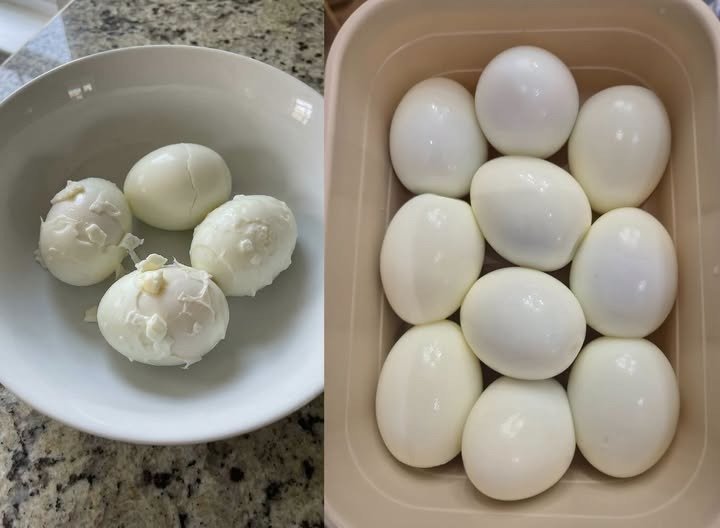
Perfect Easy-Peel Hard-Boiled Eggs
There’s nothing more frustrating than spending time boiling eggs only to have the shells stick, leaving you with rough, damaged eggs. Fortunately, there’s a simple trick professional chefs have been using for years to make peeling almost effortless.
The secret isn’t expensive equipment or special ingredients—it’s all about how you cook and cool the eggs. Starting with boiling water instead of cold water and transferring the eggs immediately into an ice bath helps separate the egg white from the shell membrane, resulting in beautifully smooth eggs every time.
Whether you’re meal prepping for the week, making deviled eggs, or egg salad, or simply enjoying a protein-packed snack, this foolproof method delivers perfect hard-boiled eggs with shells that slide right off.
Why This Method Works
The shell sticks because the thin membrane between the shell and egg white clings tightly during cooking. Plunging freshly cooked eggs into an ice bath causes the egg to contract slightly, creating space between the shell and the white. This makes peeling dramatically easier.
Starting eggs in already-boiling water also helps the proteins set more quickly, reducing the chance of sticking.
Ingredients
- 12 large eggs
- Water (enough to cover eggs by about 1 inch)
- Ice
- Cold water
Equipment
- Large saucepan
- Slotted spoon
- Large bowl
- Timer
Instructions
Step 1: Bring Water to a Boil
Fill a large saucepan with enough water to completely cover the eggs by about one inch.
Bring the water to a full rolling boil.
Step 2: Carefully Add Eggs
Using a slotted spoon, gently lower the eggs into the boiling water one at a time.
Avoid dropping them to prevent cracking.
Step 3: Boil
Once all eggs are in the pot:
- Soft-boiled: 6–7 minutes
- Jammy center: 8–9 minutes
- Medium: 10 minutes
- Hard-boiled: 11–12 minutes
For perfectly hard-boiled eggs, cook for 11 minutes.
Step 4: Prepare Ice Bath
While the eggs cook, fill a large bowl with:
- Ice
- Cold water
The colder the better.
Step 5: Shock the Eggs
Immediately transfer the cooked eggs into the ice bath.
Leave them for 10–15 minutes.
Do not skip this step—it is the biggest secret to easy peeling.
Step 6: Crack and Peel
Lightly tap the egg on the counter.
Roll it gently under your palm until small cracks cover the shell.
Start peeling from the wider end where the small air pocket is located.
Run under cool water if needed.
The shell should slide off easily.
Optional Chef’s Bonus Hack
Before placing eggs into the ice bath, gently crack each egg once.
The cold water slips beneath the shell and makes peeling even easier.
Prep Time
5 minutes
Cook Time
11 minutes
Cooling Time
10–15 minutes
Total Time
26–31 minutes
Servings
12 eggs
Storage
Refrigerator
Store unpeeled eggs for up to 1 week.
Peeled eggs should be eaten within 5 days.
Keep refrigerated in an airtight container.
Ways to Enjoy
- Breakfast
- High-protein snack
- Egg salad
- Deviled eggs
- Cobb salad
- Potato salad
- Avocado toast
- Lunch boxes
- Ramen topping
- Grain bowls
Delicious Variations
Garlic Herb Eggs
Sprinkle with garlic powder and parsley.
Mediterranean Style
Top with olive oil, oregano, feta, and tomatoes.
Everything Bagel
Season with Everything Bagel seasoning.
Spicy
Add chilli flakes or hot sauce.
Curry
Dust with curry powder and paprika.
Smoked
Sprinkle smoked paprika.
Lemon Pepper
Finish with lemon zest and black pepper.
Chef’s Notes
- Older eggs peel easier than very fresh eggs.
- Use large eggs for consistent cooking.
- Don’t overcrowd the pot.
- Lower eggs gently to prevent cracks.
- Always use an ice bath.
- Peel under running water if necessary.
Common Mistakes
Starting with Cold Water
Results are less consistent.
Skipping the Ice Bath
The shells often stick badly.
Overcooking
Green-grey yolks indicate overcooked eggs.
Using Very Fresh Eggs
Fresh eggs naturally cling to their shells.
Tips for the Best Hard-Boiled Eggs
✓ Use eggs that are 7–10 days old.
✓ Bring water to a rolling boil first.
✓ Use plenty of ice.
✓ Peel from the wide end.
✓ Store eggs unpeeled until ready to use.
✓ Crack gently instead of smashing.
✓ Roll the egg to loosen the shell.
✓ Peel under cool running water.
Nutritional Information (Per Egg)
- Calories: 72
- Protein: 6 g
- Fat: 5 g
- Saturated Fat: 1.6 g
- Carbohydrates: 0.4 g
- Sugar: 0 g
- Fiber: 0 g
- Cholesterol: 186 mg
- Sodium: 71 mg
- Potassium: 69 mg
- Vitamin: D: 6% DV
- Vitamin B12: 20% DV
- Selenium: 28% DV
- Choline: 147 mg
Nutrition values are approximate.
Health Benefits
Excellent Source of Protein
Eggs provide complete protein containing all nine essential amino acids, supporting muscle repair and helping you stay full longer.
Rich in Choline
Choline is essential for brain function, memory, and nervous system health.
Supports Eye Health
Eggs contain lutein and zeaxanthin, antioxidants that help protect your vision.
Promotes Muscle Growth
The high-quality protein in eggs makes them ideal for athletes and anyone looking to maintain lean muscle.
Budget-Friendly Nutrition
Eggs are one of the most affordable nutrient-dense foods available.
Naturally Low in Carbohydrates
Perfect for low-carb, keto, and high-protein eating plans.
Packed with Vitamins
Eggs provide vitamins A, D, E, B2, B5, B12, folate, and minerals like selenium and phosphorus.
Great for Meal Prep
Cook a batch once and enjoy convenient, healthy meals all week.
Frequently Asked Questions
Why are my eggs difficult to peel?
Very fresh eggs tend to stick to the shell. Using slightly older eggs and an ice bath helps tremendously.
Is baking soda necessary?
Some people add baking soda to the water, but it’s generally unnecessary if you use the boiling-water method and an ice bath.
Why do yolks turn green?
A green ring forms when eggs are overcooked or cooled too slowly. An ice bath prevents this.
Can I freeze hard-boiled eggs?
It’s not recommended to freeze whole hard-boiled eggs because the whites become rubbery. You can freeze cooked yolks separately for certain recipes.
How long do hard-boiled eggs last?
Unpeeled hard-boiled eggs can be refrigerated for up to one week. Peeled eggs are best enjoyed within five days.
Can I use this method for farm-fresh eggs?
Yes, but keep in mind that very fresh eggs are naturally harder to peel. Ageing them for about a week before cooking can improve results.
Why start with boiling water?
Placing eggs directly into boiling water helps the egg white set quickly, reducing the bond between the shell membrane and the egg, which makes peeling easier.
What if an egg cracks while boiling?
A small crack is usually harmless. The egg is still safe to eat, though a little white may leak out during cooking.
Do I need vinegar in the water?
Vinegar can help if an egg cracks, but it doesn’t significantly improve peeling.
Can I make these ahead for meal prep?
Absolutely. Hard-boiled eggs are one of the best meal-prep foods. Store them in the refrigerator and peel just before eating for maximum freshness.