
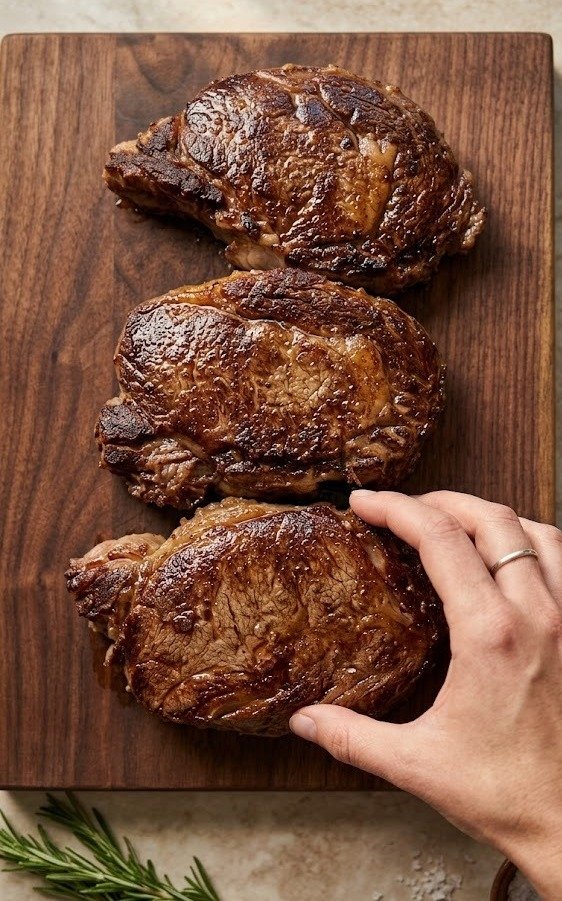
Ribeye Steak
Description
Ribeye Steak is one of the most flavorful and tender cuts of beef, known for its rich marbling and juicy texture. When cooked properly, the fat within the steak melts and bastes the meat from the inside, creating an incredibly tender and buttery bite. This simple recipe focuses on high-quality beef and minimal seasoning—just sea salt and freshly ground black pepper—to highlight the natural flavor of the ribeye. Whether cooked in a cast-iron pan or grilled, this steak delivers a restaurant-quality experience at home. Perfect for special dinners, date nights, or anytime you want a satisfying protein-rich meal, ribeye steak is a timeless classic that never disappoints.
Ingredients
Main Ingredients
- 1 ribeye steak (about 1–1.5 inches thick)
- Sea salt flakes, to taste
- Freshly ground black pepper, to taste
Optional Add-Ons
- 1 tablespoon butter
- 2 cloves garlic, crushed
- Fresh rosemary or thyme sprigs
- 1 tablespoon olive oil (for searing)
Step-by-Step Instructions
Step 1: Bring Steak to Room Temperature
Remove the ribeye steak from the refrigerator and let it sit at room temperature for 30–40 minutes. This ensures even cooking.
Step 2: Season Generously
Pat the steak dry with paper towels. Season both sides generously with sea salt flakes and freshly ground black pepper. Press the seasoning into the meat.
Step 3: Preheat Pan or Grill
Heat a cast-iron skillet or grill over high heat until very hot. If using a pan, add a small amount of olive oil.
Step 4: Sear the Steak
Place the steak on the hot surface. Sear for 3–4 minutes without moving it to develop a deep brown crust. Flip and sear the other side for another 3–4 minutes.
Step 5: Add Flavor (Optional)
Add butter, garlic, and herbs to the pan. Tilt the pan slightly and spoon the melted butter over the steak repeatedly for extra flavor.
Step 6: Check Doneness
Cook to your preferred doneness:
- Rare: 120–125°F (cool red center)
- Medium-rare: 130–135°F (warm red center)
- Medium: 135–145°F (pink center)
Step 7: Rest the Steak
Remove from heat and let the steak rest for 5–10 minutes. This allows juices to redistribute for maximum tenderness.
Step 8: Slice and Serve
Slice against the grain and serve immediately.
Tips & Notes
- Always use a thick-cut ribeye for best results.
- Do not overcrowd the pan; cook one steak at a time if needed.
- Resting the steak is essential for juiciness.
- A cast-iron skillet gives the best crust.
- Avoid flipping too often—let each side develop a proper sear.
- Use a meat thermometer for precise doneness.
Servings
- Serves: 1
Nutritional Information (Approximate Per Serving)
- Calories: 650–750
- Protein: 45g
- Carbohydrates: 0g
- Fat: 55g
- Saturated Fat: 22g
- Fiber: 0g
- Sugar: 0g
- Sodium: varies based on salt
Health Benefits
High in Protein
Ribeye steak is an excellent source of high-quality protein that supports muscle growth and repair.
Rich in Iron and Zinc
Beef provides essential minerals that support energy levels and immune function.
Energy-Dense Food
Healthy fats from marbling provide sustained energy.
Naturally Low in Carbs
Perfect for low-carb or keto-friendly diets.
Satisfying and Filling
High protein and fat content help keep you full longer.
Frequently Asked Questions
What is the best way to cook ribeye steak?
Pan-searing in a cast-iron skillet or grilling over high heat gives the best crust and flavor.
Should I marinate ribeye steak?
Not necessary. Ribeye is naturally flavorful and tender due to its marbling.
How do I know when it is done?
Use a meat thermometer for accuracy—medium-rare is most recommended for ribeye.
Can I cook it in the oven?
Yes. Sear first, then finish in a preheated oven at 400°F if needed.
Why is resting important?
Resting allows juices to redistribute, keeping the steak juicy and tender.
What should I serve with ribeye steak?
Mashed potatoes, roasted vegetables, garlic butter mushrooms, or a fresh salad pair perfectly.